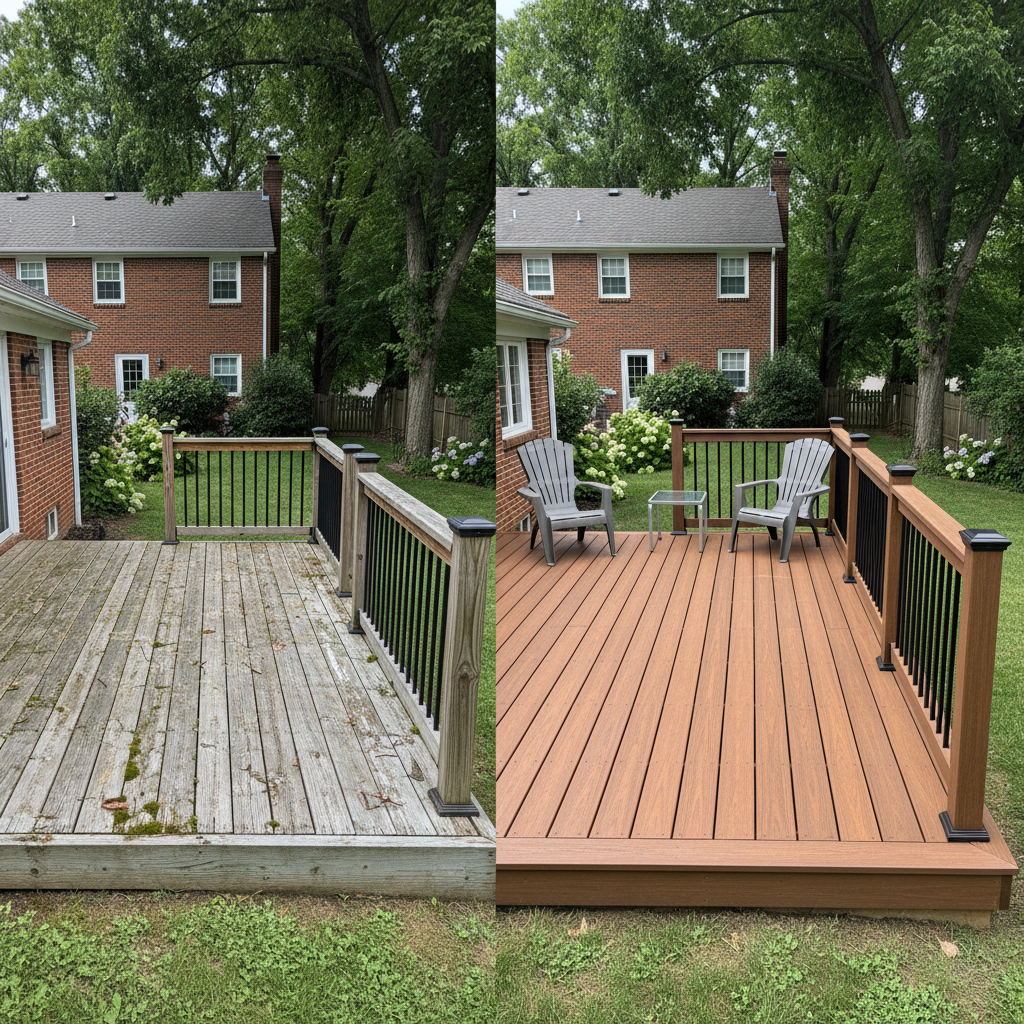
Capped vs. Uncapped Trex: What's the Deal?
So, you're thinking about a Trex deck for your place here in Brooklyn, MD. Good call. Composite decking, especially Trex, really holds up in our climate. But as you start looking into it, you'll probably hear terms like 'capped' and 'uncapped.' What do those even mean for your backyard?
Basically, uncapped composite decking is the original stuff. It's a mix of wood fibers and recycled plastic, all blended together. Picture it like a really dense, engineered wood product. It's tough, sure, but the surface isn't totally sealed. Capped composite, on the other hand, takes that same core and adds a protective polymer shell around it – usually on three or four sides, depending on the brand and specific line. It’s like a super tough, plastic coating that completely wraps the board.
I've been building decks around here for years, and I've seen both types last. But they definitely act differently, especially when you throw in our wild Maryland weather. Let's dig into the details.
Durability: Fighting the Elements
When we talk durability, the capped Trex boards win, hands down. That polymer shell really changes everything. It makes the board incredibly resistant to things that would otherwise mess with uncapped composite:
- Moisture: Our summers are humid, and we get a lot of rain. Uncapped boards can soak up a little moisture, which sometimes leads to mildew, staining, or even some expansion and contraction over time. The cap on Trex Transcend or Trex Enhance just sheds water like a duck.
- Fading: The sun beats down hard, especially on south-facing decks. Uncapped composites are more likely to fade over the years, losing some of their initial color. The cap has UV inhibitors built right into it, so it keeps its color much better. You'll really notice this difference after a few years.
- Stains: BBQ grease, spilled wine, bird droppings – life happens on a deck, doesn't it? Uncapped boards can absorb these things, making stains a real pain to get out. That hard, non-porous cap on the newer Trex lines means most stains just sit on the surface, making cleanup a breeze.
- Scratches & Scuffs: Look, no deck is totally scratch-proof, but the cap gives an extra layer of protection against everyday wear and tear from patio furniture, pets, or the kids' toys.
For a deck that's going to see a lot of foot traffic, or one that's out in the full force of our Chesapeake Bay climate – think about those salty breezes near the water, or the intense sun we get in places like Curtis Bay – capped is just going to last longer and look better while doing it.
Maintenance: Your Weekend Time is Gold
This is where capped Trex really shines for most homeowners. You're getting composite decking because you don't want to sand, stain, or seal, right? Well, uncapped still demands a bit more effort than capped.
With uncapped Trex, you'll usually need to clean it more often, sometimes with a special composite deck cleaner to deal with mildew or stubborn stains. You might even need to power wash it (carefully!) to keep it looking fresh. It can also develop a 'patina' over time; some folks like it, but it's basically a weathering process.
Capped Trex? A simple sweep and a hose-down usually does the trick. For tougher spots, a little soap and water, maybe a soft brush. That's it. You'll be spending your Saturdays enjoying your deck, not scrubbing it. This is a huge selling point for people who work hard all week and just want their weekends back.
Appearance: Looks Matter, Too
Early uncapped composites sometimes had a more uniform, almost plastic-y look. As the technology got better, they improved, but they still tend to have a more consistent color across the board.
Capped Trex, especially the higher-end lines like Transcend, really nails the natural wood look. They often feature multi-tonal streaking, realistic grain patterns, and matte finishes that mimic exotic hardwoods. The color options are also much more varied and vibrant. If you're aiming for that high-end, custom deck aesthetic, capped is definitely the way to go.
Cost: The Bottom Line
Alright, let's talk money. This is usually the biggest factor for most people. Uncapped composite decking is generally less expensive per linear foot than capped. It's the more budget-friendly way to get into the composite world.
Capped Trex, with all its extra benefits – the protective shell, the enhanced durability, the low maintenance, the premium look – comes at a higher price. You're paying for that advanced technology and the peace of mind it brings.
When you're comparing quotes from Pacific Deck Solutions or any other builder, you'll see the difference. An uncapped deck might save you a few hundred or even a thousand dollars upfront on materials for a typical Brooklyn backyard deck. But you need to balance that against the long-term maintenance, the potential for earlier fading, and the overall lifespan. Sometimes, spending a little more upfront saves you a lot more in time, effort, and replacement costs down the road.
My Recommendation for Brooklyn, MD Homeowners
Given our local conditions – the humidity, the sun, the occasional harsh winter, and let's be honest, the desire to spend less time on chores and more time enjoying our homes – I almost always recommend capped Trex decking for new installations.
While the initial cost is higher, the long-term benefits in terms of durability, minimal maintenance, and sustained appearance make it a smarter investment. You'll get more years out of your deck looking fantastic with less effort, and that's worth its weight in gold. If you've got an existing uncapped deck, don't sweat it – it's still a good product, but just know what to expect and how to care for it. But if you're starting fresh, go capped. You won't regret it.